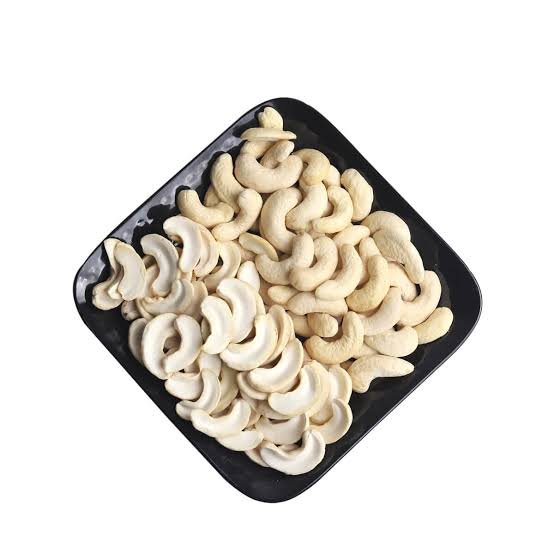
W180 vs Splits: What Sweet Shops Actually Need
Every sweet shop owner has been pitched W180 — the 'king of cashews', the biggest and most expensive whole kernel on the chart. It photographs beautifully. But follow a kilo of cashews through a working mithai kitchen and you'll find most of it goes into a grinder within the hour. This guide walks through what actually happens to cashews in a sweet shop, and where the premium for whole kernels pays off — and where it quietly disappears into the paste.
What you're really paying for with W180
W180's price premium buys exactly one thing: size and intactness. Roughly 170–180 kernels to the pound means each nut is visibly large. That matters when the customer sees the whole nut — in a gift box, on a roasted-nut counter, pressed proudly on top of special-occasion mithai. It stops mattering the moment the kernel hits a blade.
Follow the cashew through your kitchen
Think about where cashews actually end up in a typical sweet shop, and whether the nut's original shape survives to the counter:
For most shops, the first three rows are where the volume is. Kaju katli alone can run through more cashew in a week than the gift-box counter uses in a month — and every gram of it is ground smooth. Paying whole-kernel prices for paste is the single most common overspend we see among new sweet-shop buyers.
The cost logic, in plain terms
Broken grades are priced well below whole kernels because the market pays for intactness, not flavour. Splits typically cost meaningfully less than mid wholes like W320, and LWP and choora sit lower still — while W180 commands the steepest premium on the whole chart. Since a ground recipe can't tell the difference, switching your grinding stock from wholes to LWP directly widens the margin on every kilo of katli you sell, with zero change in taste or texture.
The two-grade stock policy most of our sweet-shop clients settle on: LWP for everything that gets ground or chopped, premium splits for everything the customer sees. Add whole kernels only when gift boxes or counter sales genuinely demand them.
When W180 (and other wholes) genuinely earn their keep
- Festive gift boxes — the whole nut is the product; size sells.
- Roasted and salted counter jars — customers pick with their eyes.
- Signature pieces — a single large kernel pressed on premium barfi signals quality.
- Whole-nut sweets — recipes like kaju dry-fruit clusters where the kernel stays intact.
Even here, consider whether W240 or W320 delivers the visual you need — both are whole and handsome, at a gentler premium than W180. Reserve the king size for where it's truly on display.
Frequently Asked Questions
No — W180 and splits come from the same kernels; grading is purely about size and wholeness. Freshness and storage affect taste far more than grade. In any ground or blended recipe, the two are indistinguishable.
LWP (large white pieces) is the standard: the cashews are ground into a smooth paste, so paying for whole kernels adds cost without changing the result. Cost-focused makers blend in choora as well.
Yes. Most of our sweet-shop clients order a mix — LWP for grinding and premium splits for garnish. MOQ is 10kg for most grades and 5kg for premium splits, and mixed orders are standard.
Ready to order, or still deciding?
Tell us what you're making and we'll recommend the right grade — with current bulk pricing and samples for verified businesses. MOQ starts at just 10kg.