Fine, Medium or Coarse: Which Desiccated Coconut Cut to Buy
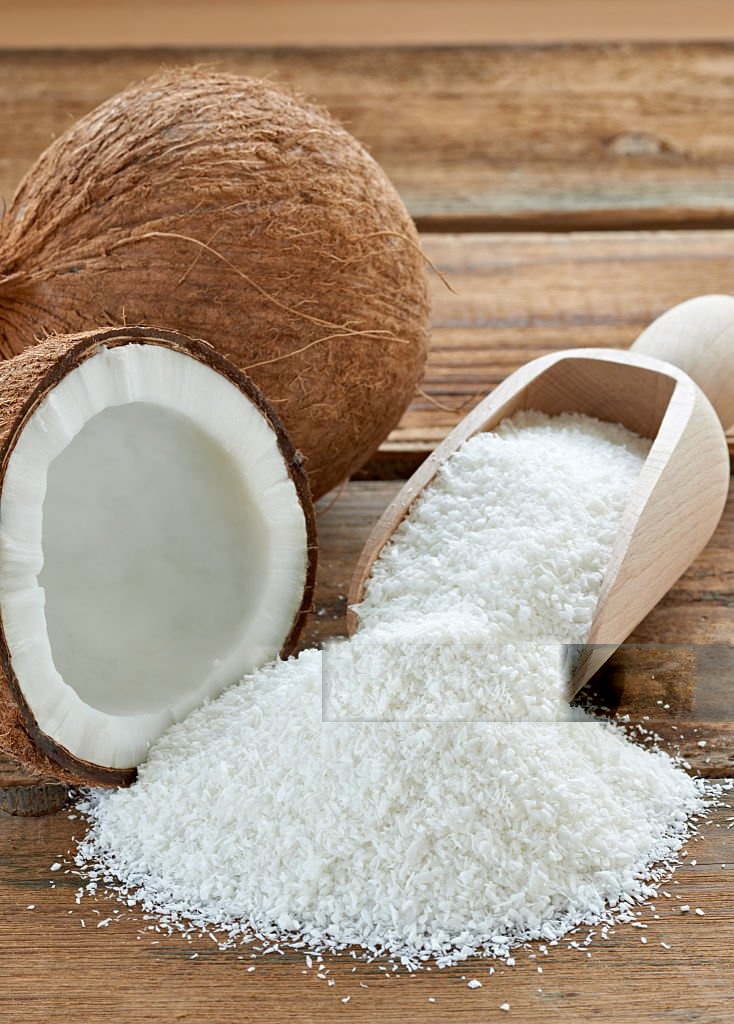
Desiccated coconut is fresh white kernel that's been grated and hygienically dried to low moisture — same coconut, months of shelf life, zero breaking and grating. But 'desiccated coconut' isn't one product: it's cut to different particle sizes, and the cut changes how it behaves in a recipe. Buy the wrong one and your ladoo coating turns powdery or your barfi turns gritty. Here's how to match cut to use.
What 'cut' actually means
Cut is simply particle size — how finely the dried coconut is milled. Finer cuts disappear into a mixture and bind; coarser cuts stay visible and give chew. Flavour is the same across cuts; texture and behaviour are what you're choosing.
Matching cut to your business
Sweet shops
Most shops run two cuts: fine for the base of coconut barfi, ladoo mixture, and smooth fillings, and medium for rolling and coating — the fleck on the outside of a ladoo is doing visual work, so it needs to be seen. Coarse earns a place if your counter carries chunky coconut-forward items.
Bakeries
Fine folds into batters and doughs without disturbing crumb structure; medium is the classic cookie and topping cut. If a recipe calls for coconut both inside and on top, that's two cuts, not one.
Food manufacturers & dry-mix units
Particle size drives mixing uniformity and mouthfeel at scale, so specify the cut, don't just order 'powder'. Fine for masala blends and instant-mix formulations; medium or coarse where the spec sheet wants visible coconut.
Unsure which cut a recipe wants? Order a small trial of two cuts side by side — MOQ starts at just 10kg — and run your actual recipe. The right answer shows up in the first batch, and mixed-cut orders are standard for our clients.
Quality checks before you commit to a supplier
- Colour: crisp white. Cream-to-yellow tint suggests age, heat damage, or oil coming to the surface.
- Smell: clean, mildly sweet coconut. Any soapy or sour note means rancidity — coconut fat turns just like cashew fat does.
- Flow: the powder should be dry and free-flowing. Clumping means moisture got in, which shortens life sharply.
- Packing: sealed, moisture-proof bags with a packing date. Desiccated coconut's long shelf life depends entirely on staying dry.
Storage: easy, but not optional
Sealed and dry, desiccated coconut holds for months — that's its whole advantage over fresh. After opening, reseal tightly or decant into an airtight bin, keep it cool and away from strong odours, and run first-in-first-out like any other dry stock. Moisture is the only real enemy; keep it out and the product barely ages.
Frequently Asked Questions
Only particle size. Fine is milled small enough to disappear into mixtures and bind them; medium gives soft visible flecks for coatings and cookies; coarse keeps distinct chewy pieces for toppings and snack mixes. Flavour is identical across cuts.
Use fine for the base mixture so it binds smoothly, and medium for rolling and coating so the coconut is visible on the outside. Most sweet shops stock both cuts for exactly this reason.
In sealed, moisture-proof packing kept cool and dry, it holds well for months. After opening, reseal tightly or move it to an airtight container — moisture is what ends its shelf life, not time alone.
It's fresh white kernel that has been grated and hygienically dried to low moisture. Flavour is clean but slightly milder than fresh-ground. For sweets, bakery, coatings, and dry masalas it substitutes directly; for fresh chutneys most kitchens still prefer whole coconuts.
Ready to order, or still deciding?
Tell us what you're making and we'll recommend the right grade — with current bulk pricing and samples for verified businesses. MOQ starts at just 10kg.