Kaju Katli Cost Per Kg: A Simple Calculator for Sweet Shops
Kaju katli is the volume king of the mithai counter, and cashew is by far its biggest cost. Yet many shops price their katli off the market rate next door rather than their own numbers. The math is simpler than it looks: once you know how much cashew goes into a kilo of finished katli, your cost per kg is one multiplication away. Here's the working formula, worked examples, and the grade decision that moves the answer most.
Step 1: How much cashew is in a kilo of katli?
Katli is essentially cashew paste and sugar syrup, cooked down and set. The cashew-to-sugar ratio decides both the taste and the cost. A classic rich recipe runs about 2 parts cashew to 1 part sugar; economy recipes push the sugar up. Since most of the syrup's water evaporates during cooking, the finished weight is close to the weight of solids that went in.
These are practical working figures — your exact yield depends on how far you cook the mixture down. Weigh one full batch (cashew in, katli out) and you'll have your own number to two decimal places. Do it once; it pays forever.
Step 2: The formula
Cashew cost per kg of katli = your cashew price per kg × cashew content per kg of katli. That's the whole calculator. If LWP costs you ₹700/kg and your recipe uses 600g of cashew per kg of katli, your cashew cost is ₹700 × 0.6 = ₹420 per kg of finished katli — before sugar, ghee, varq, fuel, and labour.
Prices in the table are illustrative — cashew rates move with the season and the market. The formula doesn't. Plug in your current quote and your own batch yield, and you have a live cost figure you can price against.
Step 3: The grade lever — the biggest saving on the sheet
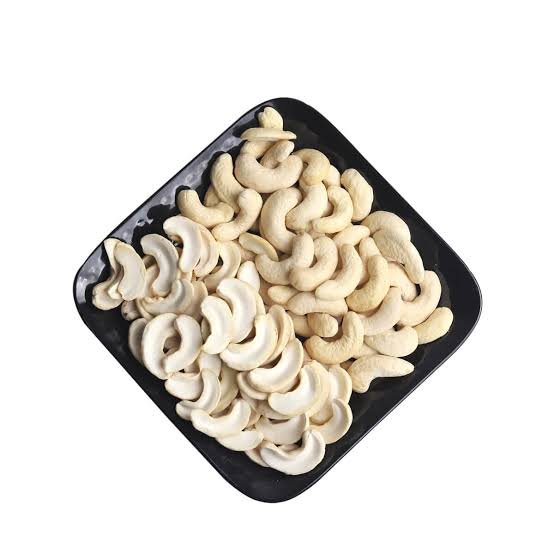
Every gram of cashew in katli gets ground into paste, so whole-kernel size is invisible in the final product. If you're grinding W320 wholes, switching to LWP (large white pieces) buys identical katli at a lower rate — and the saving flows straight through the formula. A ₹100/kg gap between wholes and LWP is ₹60 saved on every kg of katli at a 600g recipe. Cost-focused makers blend in a share of choora to bring the paste cost down further.
Run the formula with your current grade, then with an LWP quote. The difference × your weekly katli output is usually the fastest margin improvement available to a sweet shop — no recipe change, no taste change. Ask us for current LWP bulk pricing on WhatsApp; MOQ is just 10kg, so trialling costs little.
What else goes into the true cost
- Sugar and ghee — cheap per kg, but count them; they're a real share of an economy recipe.
- Silver varq — priced per sheet; divide by trays covered to get a per-kg figure.
- Fuel and labour — cooking and setting time per batch, spread over batch weight.
- Wastage and trim — edge cuts and broken pieces; either resell as mix or add a few percent to cost.
In most katli recipes, cashew is the large majority of ingredient cost — which is exactly why the grade decision and a sharp buying price matter more than anything else on this list.
From cost to selling price
Once your cost per kg is pinned down, pricing is a policy decision instead of a guess: set your margin over true cost, and re-run the formula whenever your cashew quote changes. During festive season, when cashew rates firm up, shops that know their per-kg cost adjust prices confidently — shops that don't, quietly eat the difference.
Frequently Asked Questions
Roughly 500–650g depending on the recipe: about 650g for a rich 2:1 cashew-to-sugar recipe, around 600g for a balanced one, and close to 500g for economy recipes with more sugar. Weigh one of your own batches end-to-end for an exact figure.
LWP (large white pieces) is the standard economical choice — the cashew is fully ground, so broken grades produce identical katli at a lower rate than wholes. Blending in choora lowers the paste cost further.
No. LWP is the same white kernel that broke during processing — taste, fat content, and grinding behaviour are identical. The only thing you give up is the whole shape, which the grinder removes anyway.
Multiply your cashew price per kg by the kilograms of cashew in each kg of finished katli (typically 0.5–0.65), then add sugar, ghee, varq, fuel, and labour. Example: ₹700/kg cashew × 0.6 = ₹420 of cashew per kg of katli.
Ready to order, or still deciding?
Tell us what you're making and we'll recommend the right grade — with current bulk pricing and samples for verified businesses. MOQ starts at just 10kg.