How to Choose Cashew Grades: A Buyer's Guide
Walk into any wholesale market and you'll hear a stream of codes — W180, W240, W320, splits, LWP, BB, choora. They all come from the same nut. The difference is size and wholeness, and that difference decides what you pay per kilo. This guide decodes the grading system and gives you a simple rule for choosing the right grade for your kitchen, so you never overpay for size your recipe grinds away.
How the grading system works
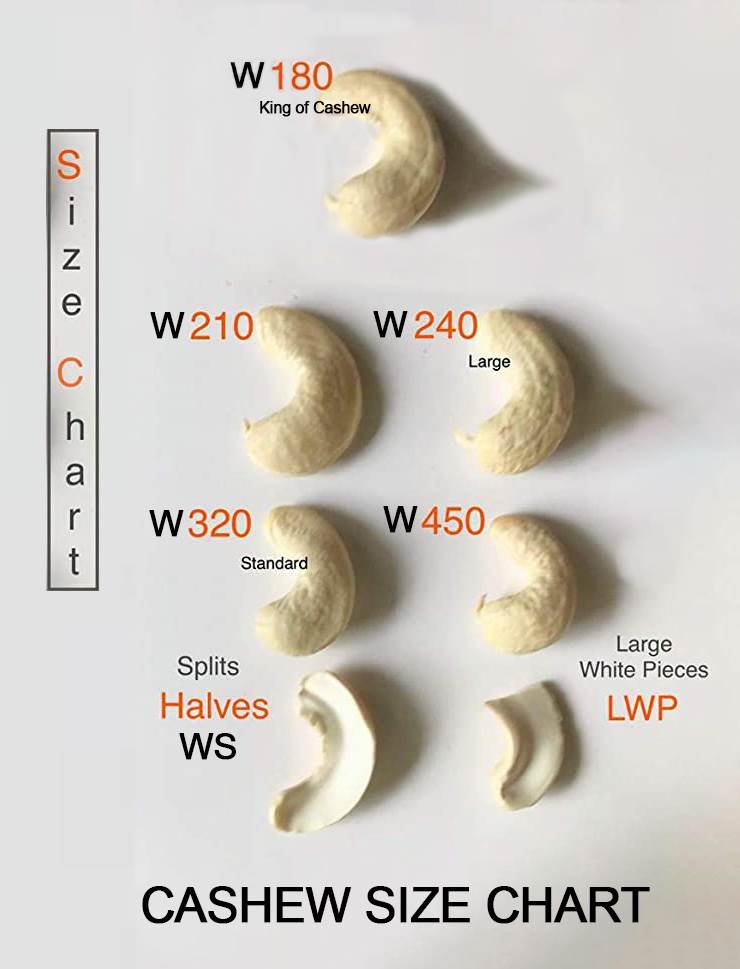
Whole cashew grades start with a W (white wholes) followed by a number — the approximate count of kernels per pound. So W180 means roughly 170–180 large kernels per pound, while W320 packs 300–320 smaller ones. The lower the number, the bigger the nut, and the higher the price per kilo.
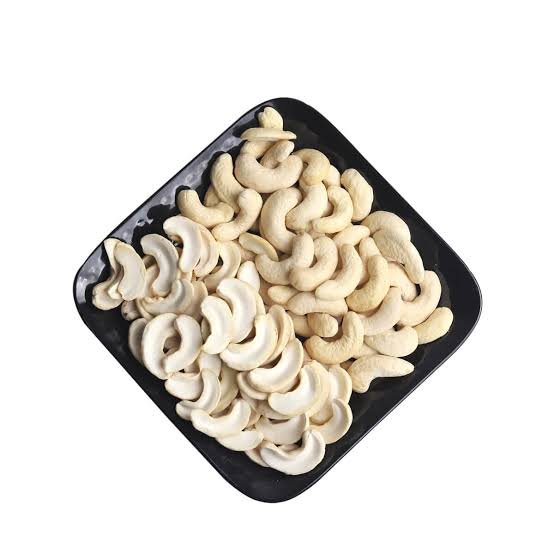
Below the wholes sit the broken grades — the same white-wholesome kernels that split or broke during shelling and peeling. These are graded by piece size, not count: splits (half kernels), LWP (large white pieces), and finally choora or BB (fine bits). Same nut, same taste — significantly friendlier price.
The one question that decides your grade
Before you compare prices, ask: will the cashew still be visible when the dish is served? If the answer is no — because it gets ground into paste, blended into a gravy base, or chopped into a filling — paying for whole-kernel size is money thrown away. The blender doesn't care whether the kernel went in whole.
- Ground or blended (katli paste, korma base, masala paste) → LWP or choora. Lowest cost per kg, identical result.
- Chopped or mixed in (sweet fillings, bakes, pulao) → LWP. Pieces are already the size you need.
- Visible as garnish (on mithai, biryani, halwa) → premium splits. Uniform halves look deliberate and cost far less than wholes.
- Served whole (roasted counters, gift boxes) → whole W grades, sized to your budget.
Matching grades to your business
Sweet shops & mithai makers
Most of a sweet shop's cashew volume ends up ground — kaju katli alone can consume kilos a day. Buy LWP for grinding and keep a smaller stock of premium splits for topping and decoration. Many of our sweet-shop clients run exactly this two-grade split and cut their cashew spend substantially without touching quality.
Restaurants & caterers
Cashew paste is the backbone of rich gravies — shahi paneer, korma, butter-style sauces. Economy splits or LWP handle this perfectly. Keep premium splits on hand only if you finish biryanis or desserts with visible fried cashews.
Bakeries & food manufacturers
For cookies, cakes, and snack mixes where pieces are folded in, LWP gives the most consistent bake. For powdered mixes, nut flours, and cost-sensitive formulations, choora is the workhorse — it's the most economical way to get real cashew into a recipe.
Not sure between two grades? Order a small trial of each — our MOQ is just 10kg (5kg for premium splits) — run them through your actual recipe, and let the result decide. Grade names matter less than how the nut performs in your kitchen.
Quality checks that matter more than grade
- Colour: kernels should be pale ivory to light cream. Yellowing or dark spots suggest age or poor storage.
- Smell: fresh cashews smell mildly sweet and buttery. Any sour or paint-like note means rancidity — reject the lot.
- Dryness: kernels should snap, not bend. Softness signals moisture, which shortens shelf life fast.
- Uniformity within the grade: a bag of premium splits should look consistent. Heavy mixing of sizes usually means loose grading.
Frequently Asked Questions
W stands for white wholes and 320 is the approximate kernel count per pound (about 300–320 kernels). It's the most widely traded whole cashew grade worldwide — a mid-size kernel at a mid-range price.
No. Splits, LWP, and choora are the same white-wholesome kernels that broke during processing. Taste and nutrition are identical — you're only giving up the whole shape, which is why they cost significantly less per kilo.
LWP (large white pieces) is the standard choice — the cashews are ground into paste, so whole-kernel size adds cost without adding quality. Some makers blend in choora to lower cost further.
Choora refers to the fine bits and small broken pieces of cashew kernels — also traded as BB (baby bits). It's the most economical grade and is used for masala pastes, sweet fillings, and powdered preparations.
Ready to order, or still deciding?
Tell us what you're making and we'll recommend the right grade — with current bulk pricing and samples for verified businesses. MOQ starts at just 10kg.